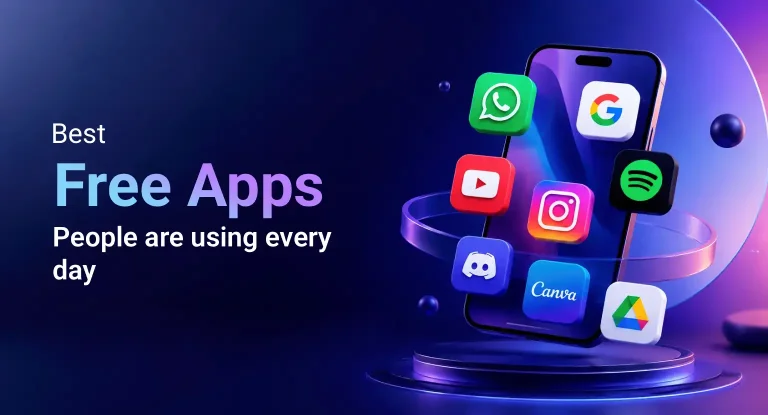

Best Free Apps People Are Using Every Day
Most people download apps with good intentions.
A productivity app to finally stay organized. A fitness app to build healthier habits. A budgeting app to save money. But after a few days, many of those apps end up forgotten somewhere between food delivery notifications and random screenshots.
Still, some apps become part of everyday life almost instantly.
Not because they’re trendy for a week, but because they genuinely make life easier. They save time, reduce stress, improve productivity, or simplify tasks people deal with daily. In 2026, free apps have become surprisingly powerful, and many now offer features that once required expensive software subscriptions or professional tools.
That’s exactly why millions of people rely on free apps every single day for work, communication, creativity, organization, fitness, and entertainment.
Why Free Apps Are Better Than Ever
A few years ago, most free apps came with obvious compromises. Users expected constant ads, limited features, poor design, or aggressive upgrade prompts that made the experience frustrating.
That has changed dramatically.
Today, many companies use free apps to build massive audiences before introducing optional premium features later. Because competition in the app market is extremely intense, companies are investing heavily in creating polished user experiences even for free users.
As a result, some free apps now rival paid software in terms of quality and usefulness.
People are no longer downloading apps just for entertainment. Many now build entire daily workflows around free digital tools that help them stay productive and organized.
Productivity Apps People Actually Keep Using
One reason productivity apps often fail is because they try to overcomplicate simple tasks. The apps people continue using long term are usually the ones that feel intuitive and frictionless.
Notion
Notion became popular because it combines multiple tools into one flexible workspace. People use it for note-taking, project management, task tracking, journaling, content planning, and team collaboration.
What makes it stand out is adaptability. Students, freelancers, startups, and creators all use it differently depending on their workflow. Instead of forcing users into a rigid system, Notion allows people to customize how they organize information.
That flexibility is a major reason why so many users continue relying on it daily.
Todoist
Many to-do list apps become cluttered and overwhelming after extended use. Todoist keeps things simple, which is exactly why people stick with it.
The clean interface makes it easy to:
- manage daily tasks,
- set reminders,
- track recurring goals,
- and organize projects without distractions.
For busy users, simplicity often matters more than endless advanced features.
Google Keep
Google Keep remains one of the fastest ways to capture ideas instantly. Whether someone is creating shopping lists, saving quick notes, recording voice reminders, or organizing thoughts, the app feels lightweight and effortless.
Because it opens quickly and syncs across devices seamlessly, users naturally return to it throughout the day without thinking much about it.
That convenience is what makes lightweight apps surprisingly powerful.
AI Apps That Became Part of Daily Workflows
Artificial intelligence is no longer a futuristic experiment. AI-powered apps are now integrated into everyday routines for millions of people around the world.
ChatGPT
AI assistants are now used for far more than casual questions. People rely on them daily for:
- brainstorming ideas,
- writing assistance,
- coding support,
- research,
- productivity,
- travel planning,
- and learning new skills.
What’s interesting is how quickly AI became normalized. Many users now treat AI tools like digital assistants that help reduce mental workload and improve efficiency.
Canva
Design used to feel intimidating for beginners, especially people without professional creative experience. Canva completely changed that.
The platform allows users to create:
- presentations,
- social media graphics,
- resumes,
- posters,
- marketing materials,
- and business visuals
using simple drag-and-drop tools.
The free version alone offers enough features for many students, creators, freelancers, and small businesses to produce professional-looking content without expensive software.
CapCut
Short-form video dominates modern social media, and CapCut became one of the most widely used editing apps because it makes video creation feel approachable.
Creators use it daily for:
- TikTok videos,
- Instagram Reels,
- YouTube Shorts,
- subtitles,
- transitions,
- effects,
- and AI-assisted editing tools.
Compared to traditional editing software, the learning curve feels dramatically easier for beginners.
Apps Helping People Stay Organized
Modern life often feels overloaded with notifications, deadlines, and constant information. That’s why organization apps continue growing rapidly in popularity.
Google Calendar
Google Calendar remains one of the simplest but most effective tools for managing time. People use it for:
- scheduling meetings,
- planning routines,
- tracking appointments,
- organizing work tasks,
- and setting reminders.
Once everything syncs across devices, daily planning becomes significantly easier.
Trello
Some people think visually instead of through long lists, which is why Trello’s card-based system became so popular.
The app helps users organize:
- projects,
- workflows,
- goals,
- content schedules,
- and collaborative tasks
in a clean, visual layout that feels intuitive.
Freelancers, startups, and remote teams especially rely on it for task management.
Finance Apps Helping People Save Money
Financial stress remains one of the biggest everyday concerns for many people. Budgeting apps have become more popular because they increase visibility into spending habits.
Wallet
Expense tracking apps help users understand where their money actually goes each month.
Wallet allows people to:
- monitor spending,
- manage budgets,
- track subscriptions,
- and organize personal finances more clearly.
Often, simply seeing spending patterns helps people make smarter financial decisions automatically.
Splitwise
Anyone who has traveled with friends or shared living expenses understands how confusing shared payments can become.
Splitwise simplifies that process by helping users track:
- group expenses,
- rent sharing,
- travel costs,
- and household payments.
The app removes awkward conversations about who owes what.
Fitness and Health Apps People Consistently Use
The best health apps are usually the ones that make consistency easier rather than trying to overwhelm users with complicated systems.
MyFitnessPal
Many people improve their health simply by becoming more aware of daily habits. MyFitnessPal helps users track:
- meals,
- calories,
- nutrition,
- fitness goals,
- and exercise routines.
That visibility makes healthy habits easier to maintain over time.
Nike Training Club
Gym memberships can be expensive and difficult to maintain consistently. Nike Training Club became popular because it provides free guided workouts that users can follow from home.
The app includes:
- strength training,
- yoga,
- beginner workouts,
- mobility exercises,
- and structured fitness plans.
That accessibility helped millions of people build healthier routines without needing expensive equipment.
Communication Apps That Became Essential
Some apps become so integrated into daily life that people barely notice how often they use them.
Messaging apps are now central to communication for families, businesses, communities, and workplaces. WhatsApp became essential in many countries because it combines:
- messaging,
- voice calls,
- video calls,
- file sharing,
- and group communication
inside a simple interface that works across devices.
Telegram
Telegram’s popularity grew rapidly because of:
- large group support,
- channels,
- cloud syncing,
- privacy-focused features,
- and automation tools.
Many creators and businesses now use it for community building in addition to messaging.
Why Some Apps Become Daily Habits
The most successful apps are not always the most advanced technically.
The apps people keep using every day usually succeed because they:
- save time,
- reduce stress,
- simplify routines,
- or remove friction from daily tasks.
That convenience creates habits.
An app that consistently saves even ten minutes daily becomes extremely valuable over time.
Once users integrate those tools into routines, removing them feels inconvenient.
That’s why genuinely useful apps often grow through word of mouth rather than advertising alone.
A Common Mistake: Downloading Too Many Apps
Ironically, downloading too many productivity apps often creates more chaos instead of improving organization.
People constantly switch between:
- note-taking apps,
- habit trackers,
- planners,
- AI tools,
- and scheduling systems.
Eventually, managing the apps becomes the distraction itself.
The most productive users usually rely on a smaller set of tools they genuinely use consistently instead of constantly chasing new trends.
Final Thoughts
The best free apps in 2026 are no longer just entertainment tools. Many have become essential parts of modern life, helping people stay organized, improve productivity, manage finances, communicate faster, and simplify everyday tasks.
What makes these apps powerful is not simply the number of features they offer. It’s how naturally they fit into daily routines and reduce friction in small but meaningful ways.
The smartest approach is not downloading every trending app online. It’s finding a few reliable tools that genuinely improve how you work, create, communicate, and manage your life.
Because when technology truly makes life easier, people keep using it every single day.
Looking for more useful tech and productivity recommendations? Explore more app guides, digital tools, and productivity insights designed to help you work smarter, stay organized, and simplify your everyday routine with technology.